
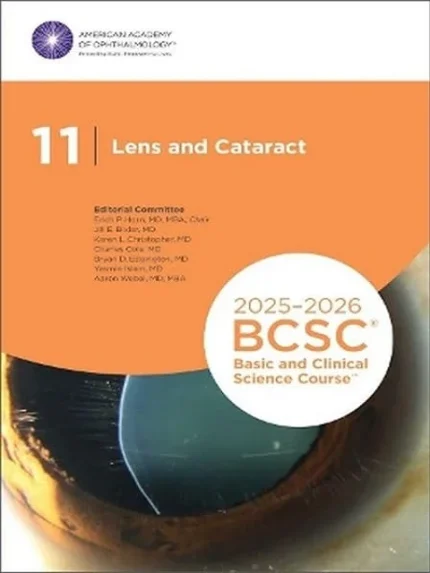


2025-2026 Basic and Clinical Science Course, Section 10: Glaucoma
2025–2026 Basic and Clinical Science Course (BCSC), Section 10: Glaucoma is the authoritative reference on glaucoma diagnosis, pathophysiology, and management, published by the American Academy of Ophthalmology. This section is an indispensable resource for ophthalmology residents, fellows, practicing ophthalmologists, and eye care specialists seeking comprehensive, evidence-based guidance on the evaluation and treatment of glaucoma and related optic neuropathies.
This edition provides in-depth coverage of glaucoma epidemiology, risk factors, molecular and cellular mechanisms, and optic nerve pathophysiology. It details diagnostic strategies, including tonometry, visual field testing, optic nerve imaging, and gonioscopy, and integrates modern therapeutic approaches, encompassing medical therapy, laser interventions, and surgical options such as trabeculectomy, minimally invasive glaucoma surgery (MIGS), and tube shunts.
A key strength of this section is its integration of foundational science with practical clinical application. High-quality illustrations, clinical images, and procedural diagrams enhance understanding of complex glaucomatous changes, disease progression, and intervention strategies. The text emphasizes evidence-based decision-making, patient monitoring, and long-term management, ensuring practitioners can optimize outcomes while minimizing complications.
The 2025–2026 edition incorporates the latest clinical guidelines, emerging treatment modalities, and recent research findings, including advances in neuroprotection, targeted drug delivery, and surgical innovations. It also addresses special populations, such as pediatric glaucoma, angle-closure glaucoma, and secondary glaucomas, providing a complete reference for modern glaucoma care.
Available on TheBookLance, Section 10 of the BCSC series is ideal for residency study, board exam preparation, clinical reference, and continuing medical education. Its comprehensive coverage, clinical relevance, and authoritative guidance make it an essential resource for anyone involved in glaucoma diagnosis and management.
Key Features
Comprehensive coverage of glaucoma pathophysiology, diagnosis, and management
Integrates basic science with clinical application
Detailed discussion of diagnostic tools: tonometry, visual fields, imaging, gonioscopy
Covers medical, laser, and surgical treatment modalities
High-quality clinical images, illustrations, and procedural diagrams
Updated 2025–2026 evidence-based guidelines and research findings
Focus on patient monitoring, outcomes, and complication management
Includes special populations and advanced glaucoma therapies
Ideal for residents, fellows, practicing ophthalmologists, and eye care specialists





Reviews
There are no reviews yet.